A practical guide to raising fresh produce on balconies, patios, and even windowsills
Rising grocery costs and growing interest in household self-reliance have made home gardening more appealing than ever. Yet most people hesitate, believing they need a large backyard, months of free time, or years of experience to grow anything worth eating. The 4 Foot Farm Blueprint was created to dismantle those assumptions. It promises a never-ending supply of fresh food grown in just 4 feet of usable space—no expert knowledge, no massive projects, and no endless weekends in the garden.
Created by Sam McCoy, this guide has already been adopted by more than half a million people. It is designed not for gardening enthusiasts seeking a new hobby, but for everyday people who simply want better, fresher food and more control over what appears on their table. This review explores exactly what The 4 Foot Farm Blueprint is, how it works, what you receive, who it is for, and whether it delivers on its bold promises.
What Is The 4 Foot Farm Blueprint And Who Created It?
The 4 Foot Farm Blueprint is a picture-led, step-by-step online program that teaches anyone how to grow reliable, repeat-harvest food in very limited space. Whether you have a small balcony, a sunny patio, a tiny yard, or just a bright windowsill, the system is built to fit the area you already have. The guiding principle is straightforward: start with food you already buy, fit it into your available space, and keep harvesting the same plants again and again so your effort goes further.
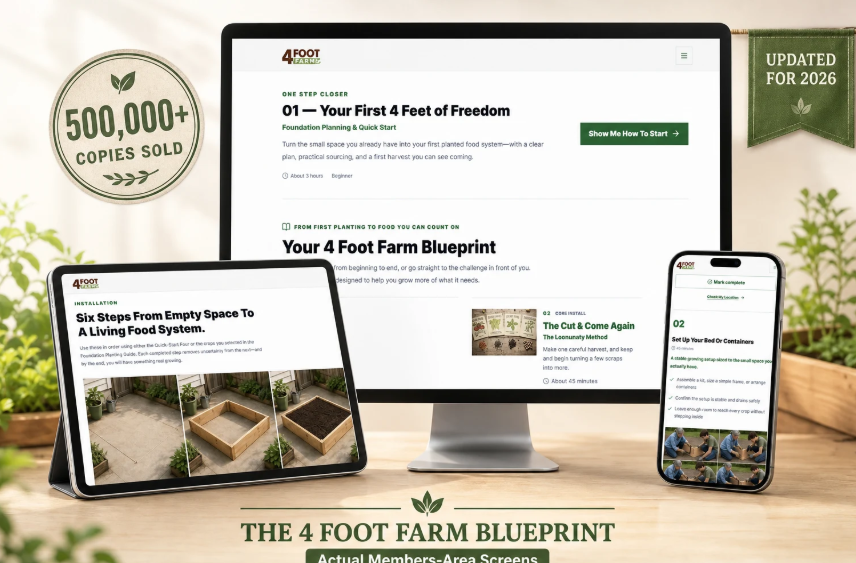
The creator, Sam McCoy, developed the method originally to provide fresher food for his family without the expense or labor of a large garden. He tested what worked, discarded what did not, and refined the plan into a simple sequence anyone could follow. Over 500,000 copies were initially distributed, and now—with food costs continuing to climb—he has re-released the Blueprint with updated instructions, clear photography, and expanded resources to help even more households become more self-reliant.
Crucially, this is not a gardening textbook. It does not teach you the art and science of horticulture in depth. Instead, it gives you a working system for producing food. The difference matters: you are not studying a new hobby; you are following a proven plan that yields tangible results quickly.
>>> Get 4 Foot Farm Blueprint In The Official Website
Product Specifications And Key Details
The following table presents verified information about The 4 Foot Farm Blueprint based on official sources.
Table
| Feature | Specification |
|---|---|
| Product Name | The 4 Foot Farm Blueprint |
| Creator | Sam McCoy |
| Format | Online digital access via members area |
| Total Content | 10 comprehensive step-by-step chapters |
| Supporting Materials | Picture-led instructions, build kits, planners, printable helpers |
| Primary Purpose | Grow repeat-harvest food in small spaces: patio, balcony, yard, windowsill |
| Core Method | Cut & Come Again, vertical growing, container gardening, companion planting |
| Suitable For Beginners | Yes; designed specifically for people with no prior gardening experience |
| Space Required | 4 feet or less; any sunny location, indoors or outdoors |
| Original Price | Approximately $47 |
| Current Price | One-time payment of $7 |
| Access Speed | Instant access immediately after purchase |
| Guarantee | 60-day money-back guarantee |
| Separate Physical Option | Printed Field Guide available separately |
| Total Users | Over 500,000 copies previously distributed |
Core Philosophy: Start With Food, Not With Gardening
Most gardening resources begin with plants, soil preparation, tools, and technique. The 4 Foot Farm Blueprint begins where you actually live: at your dinner table. The central insight is that growing food becomes rewarding and sustainable only when you grow things you already eat. There is little value in mastering exotic vegetables your family dislikes while the same grocery list items appear week after week.
The Blueprint works backward from that reality using a simple three-step framework:
Step One: Choose food you already buy. You identify the vegetables and herbs that regularly appear on your grocery receipts. These are the crops you will grow. No obscure species, no ornamental plants, no difficult specimens—just the useful, familiar produce you already purchase. Every plant recommended in the guide is selected because it is productive, edible, and worth money at the store.
Step Two: Fit that food into the space you already have. You do not need to build a garden. You use what is already available: a patio corner, balcony railings, sunny windowsills, or small containers. The Blueprint teaches vertical growing, compact setups, and clever placement so every square inch produces food. The goal is not to garden in 4 feet—it is to produce enough food to matter, within the space you have.
Step Three: Keep harvesting from the same plants. Instead of single-harvest crops that you pull out and replace, the system emphasizes “Cut & Come Again” varieties. You harvest what you need, and the plant regrows. One planting yields months of meals. This efficiency, combined with simple preservation methods, means your small space becomes a continuous, renewable food supply.
What You Find Inside The 10 Chapters
The Blueprint is organized into 10 chapters that build logically from your very first planting through year-round harvest and storage.
Chapters 1–2: Getting Started And The Cut & Come Again Method. You begin with the easiest, most reliable crops. You learn how to harvest without killing the plant, establishing a rhythm where one planting feeds you for months. No prior experience required—just clear pictures and straightforward steps.
Chapters 3–6: Maximizing Small Spaces. These chapters are the heart of the Blueprint. You learn vertical growing techniques, container setups that can be moved as needed, and companion planting so plants protect and support one another. Even corners that seem useless become productive growing areas. Every method is chosen for simplicity and yield, not for appearance or difficulty.
Chapters 7–10: Protection, Seasonality, Harvesting, And Indoor Growing. You discover how to shield plants from pests and weather, extend the growing season through changing months, and preserve what you harvest so nothing is wasted. The final chapters also cover indoor growing—showing how even a single sunny corner inside your home can provide fresh produce year-round.
Alongside the chapters, you receive build plans, printable planners, quick-reference guides, and additional tools designed to remove guesswork. Everything is arranged so you can open the guide, see exactly what to do, and go do it—without needing to research or improvise.
Benefits And Advantages Over Traditional Gardening
Extremely Low Barrier To Entry
The most powerful advantage of The 4 Foot Farm Blueprint is that it eliminates every common excuse. You do not need land, you do not need experience, and you do not need expensive tools. You can begin today with containers you already own or inexpensive supplies. The price of the entire guide is less than a single bag of premium fertilizer or one season of store-bought herbs—making it accessible to nearly anyone.
Produce Food, Not A Hobby Project
Traditional gardening often becomes a second job: tilling, weeding, watering, diagnosing problems, and starting over each season. The Blueprint is designed to be the opposite. Once established, your small food garden requires minutes per day, not hours per weekend. You harvest what you need, and the system continues producing. The goal is food on your plate, not a display garden for visitors.
Immediate Savings And Long-Term Value
Many household expenses rise month after month, but the food you grow costs nothing after the initial setup. The Blueprint guides you toward crops that are expensive to buy but easy to grow. Over months and years, the return on investment becomes substantial. A single basil plant can replace dozens of store-bought containers; one steady supply of fresh greens saves significant money over a season. The guide effectively puts grocery money back in your pocket every time you step outside to pick dinner ingredients.
Resilience And Reliability
Because the system relies on repeat-harvest crops that regrow after cutting, you establish a renewable supply rather than a one-time yield. When you combine this with the season-extending and preservation techniques taught in later chapters, you create a degree of stability and food security that is entirely within your control. Prices at the store may fluctuate, but your 4-foot garden keeps producing.
Who This Is For And Who Should Look Elsewhere
The 4 Foot Farm Blueprint is built specifically for:
- Apartment and condo dwellers with balconies, patios, or sunny windowsills
- Busy families who want fresh food but have little free time
- Complete beginners who have never successfully grown anything
- Budget-conscious households tired of rising grocery costs
- Anyone who wants to know exactly where their food comes from and how it was grown
It is not for:
- Serious gardeners seeking advanced horticultural techniques, rare vegetables, or ornamental landscaping
- People hoping to grow large staple crops like wheat, corn, or potatoes in quantity
- Those who prefer physical books exclusively—though a separate printed guide is available
- Anyone unwilling to follow simple instructions or maintain basic consistency with watering and care
Usage, Results Timeline, And Important Realities
How To Access And Use The Blueprint
Purchase provides instant access through a secure members area. You can view the chapters on any device—computer, tablet, or smartphone. Many users keep the guide open on their phone while outside planting, following along step by step. You do not need to wait for shipping or carry heavy books.
Realistic Timeline And Expectations
The Blueprint is designed to produce first harvests quickly, often within weeks of planting. However, it is important to maintain realistic expectations:
- Weeks 1–4: Seeds sprout, seedlings establish, and you begin early care
- Weeks 4–8: First small harvests begin—herbs, loose-leaf greens, quick-growing vegetables
- Month 2 onward: Regular harvests become routine; plants grow larger and produce more
- Seasonal progression: With the techniques taught in Chapters 7–10, you extend harvest across seasons
The most important principle is consistency. You do not need to be perfect, but you do need to water regularly, protect plants from extremes, and harvest properly so they regrow. The Blueprint simplifies every step, but the plants still require basic care and patience.
Satisfaction Guarantee
The program includes a 60-day money-back guarantee. You have two full months to review the materials, try the methods, and decide whether the system works for you. If you find it is not a fit, contacting support within that period entitles you to a refund. This removes financial risk and allows you to evaluate the guide thoroughly before committing long-term.
Safety, Sustainability, And Important Considerations
Safe, Natural Growing Methods
Because you control the soil, water, and care, you avoid unknown chemicals and agricultural treatments often found in store-bought produce. The Blueprint encourages natural, simple growing methods that are safe for your family, pets, and the environment. You can grow food with complete confidence in how it was raised.
Important Realities To Consider
- Results vary by location: Sunlight, temperature, and growing season differ by region. The methods work widely, but exact timing and yield will adapt to your climate.
- “4 feet” means space, not exact measurements: The title refers to a small useful area, not a rigid 4-by-4-foot bed. Windowsills, balconies, and containers all qualify.
- Consistency matters more than perfection: A simple garden tended regularly outperforms a perfect setup neglected occasionally. The Blueprint is designed to be easy to maintain so you keep going.
- Digital delivery: Confirm you are comfortable accessing the materials online. A physical companion guide exists separately if you prefer printed reference material.
Final Assessment: Value, Simplicity, And Promise
The 4 Foot Farm Blueprint succeeds because it solves the right problem. Most people do not want to become gardeners—they want better food at a lower price, grown in a way they trust. Sam McCoy does not ask you to master a complex subject; he gives you a working system that fits into the life you already live.
At the current price of $7, the guide costs less than a single week of premium produce. It includes 10 chapters, visual instructions, planning tools, and a 60-day guarantee. For anyone paying increasingly high grocery prices while wishing for fresher, cleaner ingredients, this is remarkably low-risk.
The Blueprint will not turn you into a professional horticulturist. It will not feed an entire neighborhood from a balcony. But it will show you—clearly, patiently, and simply—how to turn the unused space you already have into a steady supply of fresh food. That is exactly what it promises, and for hundreds of thousands of households, that has been more than enough to change how they eat and live.